
How to Stay in Control of Your Dubai Property When You Use a Property Manager?
Long-term tenants still generate a year-round list of renewals, maintenance, and deadlines. Here's what a Dubai property manager actually covers, what it costs, and where the responsibility still sits with the owner.
Hiring a property manager can take tenant calls, maintenance coordination and tenancy administration off your hands. But you still want to know what your property is earning, which expenses are coming up and whether important documents are current.
For a long-term rental in Dubai, that means keeping a clear view of the property throughout the tenancy. A rent payment, an insurance renewal and an AC service report each tell you something different about how it is being managed.
Whether you handle the work yourself or delegate it, bringing dates, documents and financial information together makes ownership easier to oversee. You can give someone else responsibility for the daily work while staying informed and in control.
Decide what you want to delegate
Some owners are happy to speak with tenants, arrange contractors and organise renewals themselves. Others need someone local or prefer to hand over day-to-day management entirely.
Start by identifying the work you want help with and the decisions you want to retain. You might delegate routine tenant communication and maintenance coordination while staying involved in major repairs, tenancy changes and budget decisions.
If you are still deciding whether to hire a manager, our partner NST Real Estate's guide to property management for long-term rentals in Dubai explains the services and costs to consider.
Once you have chosen how to manage the property, the next step is agreeing how you will stay informed.
Five things owners should always be able to check
You shouldn't need to reconstruct your property's position from scattered emails, messages and attachments. Keep these five areas easy to review, whether you manage one apartment or several properties.
1. Tenancy dates and documents
Keep the current tenancy contract and Ejari certificate accessible, together with the tenancy end date and a date to begin reviewing renewal arrangements. Agree who will prepare the paperwork and confirm when it is complete.
For registration and renewal procedures, refer to Dubai Land Department's official guidance. Keep a link to the current guidance alongside your records so you or your manager can check requirements when needed.
2. Rent due and rent received
Know what rent is expected, what has been received and whether any payment needs follow-up. If money is collected on your behalf, agree how collections, deductions and transfers to you will be reported.
A clear payment record helps you understand the property's cash flow and gives you a useful starting point when discussing an outstanding balance with your manager.
3. Maintenance records and outstanding work
Keep service reports, repair invoices and relevant warranties together. For outstanding work, you should know what the issue is, who is handling it and whether a decision is needed from you.
For example, after an AC service, keep the report and invoice with the property's records. If the contractor recommends further work, ask your manager to explain the recommendation and any proposed cost before proceeding, subject to your agreed emergency arrangements.
4. Insurance and service charges
Track the renewal dates of any owner-held insurance policies and keep service charge statements accessible. Check which amounts are due, which have been paid and whether the records need updating.
These dates may have little connection to the tenancy calendar. Reviewing them separately helps you plan expenses across the year.
5. Income after expenses
Rent collected is only part of the picture. Review management fees, service charges, maintenance, insurance and other relevant costs to understand how much income remains.
If the property is financed, include loan payments when assessing your cash flow. Keeping the underlying figures accessible makes it easier to compare periods and understand why the amount left over has changed.
See what needs attention with OwnersVue Health Cards
Insurance, AC servicing and service charges follow different schedules. OwnersVue Health Cards bring their status, relevant dates and supporting records into one overview, helping you see what is current and what needs attention.
For example, the insurance card can highlight an expired policy, while the AC card shows the recorded service dates and the service charges card indicates when an update is due. You can use that overview to identify the records you or your manager need to review.
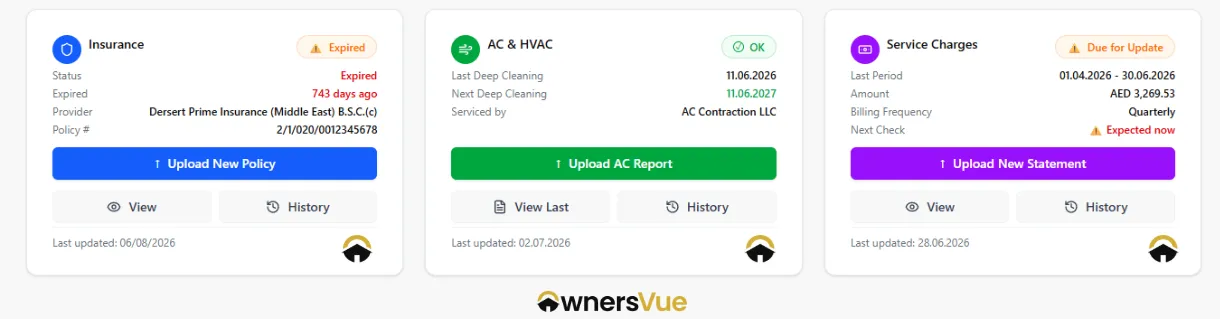
OwnersVue Health Cards: a landlord tool that brings insurance renewals, AC servicing and service charge updates into one clear overview.
The overview is most useful when the records are kept current. Make updating documents and dates part of your routine, or agree that responsibility with your property manager.
Agree who handles what
A clear management agreement helps both sides work confidently. Alongside the service scope and fees, discuss:
- Routine work: Who handles tenant questions, contractor appointments and document updates?
- Spending authority: What can the manager authorise, and when should they obtain your approval or additional quotes?
- Emergencies: What should happen if urgent work is needed and you cannot be reached?
- Updates: How will you hear about unresolved issues, completed work and decisions requiring your input?
- Records: Who will keep invoices, reports and property information up to date?
These arrangements give your manager room to do the job while keeping your involvement clear. Review them when circumstances change, such as a new tenancy or a major repair.
Let your property manager work directly in OwnersVue
OwnersVue's property manager module lets you give your manager access to manage your property on your behalf. Your manager can take responsibility for day-to-day management within the platform while you retain owner control and visibility over your property's key dates, documents and finances.
This gives you and your manager a shared place to work from. You can stay informed about the property while they handle the operational work, using the responsibilities and decision-making arrangements you have agreed together.
If you prefer to self-manage, you can use OwnersVue to organise the property yourself. The same overview helps you keep track of the information you need, whether you are doing the work or overseeing someone who does it for you.
Keep management fees and property expenses visible
When comparing management options, ask for a breakdown of the total expected cost. Check what the management fee includes, whether VAT applies and which services or third-party costs are charged separately.
Percentage-based fees are one option. Our partner, NST Real Estate, offers a fixed-fee approach based on the property's type and size, rather than its rental income. This can suit owners who value transparent management costs and want to plan their expenses more confidently. NST explains its pricing approach in its long-term rental management guide.
A fixed management fee makes that part of the budget easier to plan; repairs and other property expenses can still vary. Whatever pricing model you choose, keep management fees alongside the property's other costs so you can review actual spending against your expectations.
Build a simple owner review routine
Set aside a regular time to review the property. A monthly check can be a useful starting point, with urgent issues handled as they arise.
Check whether expected rent has arrived, review new expenses and look for dates or records that need attention. Follow up on unresolved maintenance and confirm which decisions your manager needs from you.
Keep access to the current tenancy documents, insurance policies, service reports and invoices throughout the management relationship. This makes it easier to answer questions now and provides continuity if your management arrangements change later.
Delegating property management should make ownership easier to oversee. With OwnersVue, you can let your property manager handle the daily work while keeping the visibility and control you need as the owner.
References
- Frequently Asked Questions — Dubai Land Department
- Property Management in Dubai — NST Real Estate
- Do You Need Property Management for a Long-Term Rental in Dubai? — NST Real Estate